Easiest European Languages to Learn: Complete Ranking for English Speakers
The Language Research Desk
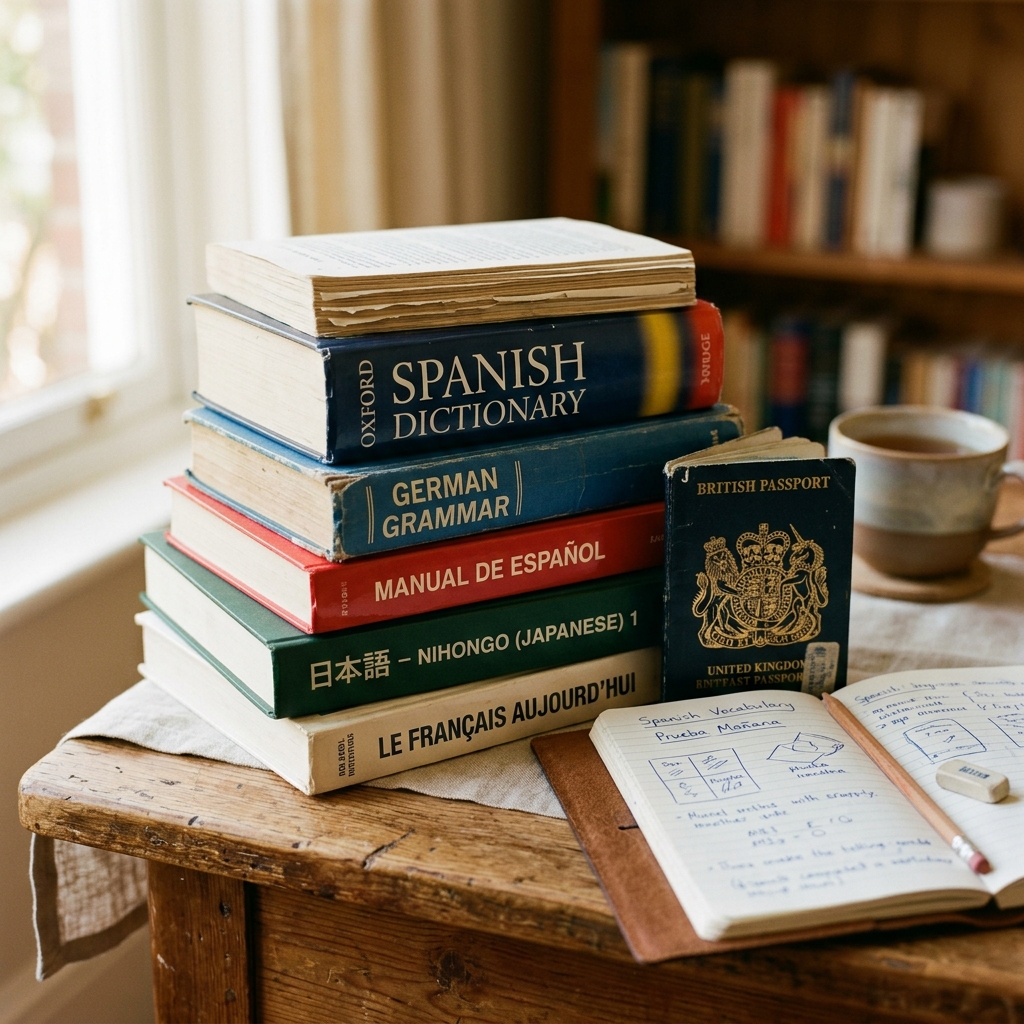
This ranking is Europe-only. The cross-family top ten (including Afrikaans and other non-European Category I options) is What Is the Easiest Language to Learn for English Speakers?. For Slavic languages specifically, use easiest Slavic language to learn.
Europe is home to over 200 languages, but for English speakers choosing which one to learn, the practical list narrows to about 20 major languages with strong resources and real-world utility. These languages span a wide difficulty range --- from Category I languages you can learn in under a year to Category III languages that require years of dedicated study.
This ranking covers every major European language, organized by difficulty, so you can make an informed choice based on your goals, timeline, and motivation.
How We Rank Difficulty
Our ranking uses three primary factors:
- FSI Category --- The U.S. Foreign Service Institute’s classification based on how many class hours English-speaking diplomats need to reach professional proficiency
- Linguistic similarity to English --- Shared vocabulary, grammar structures, and language family connections
- Resource availability --- How easy it is to find courses, tutors, media, and practice opportunities
For a full explanation of the FSI system, see our FSI difficulty rankings breakdown.
Tier 1: Easiest (FSI Category I --- 600-750 hours)
These languages share the most with English and can be learned to conversational fluency within 6-12 months of consistent daily study.
1. Dutch
Hours to proficiency: 575-600 Language family: Germanic (same as English) Why it ranks first: Dutch is the closest major language to English. The vocabulary overlap is enormous --- hundreds of words are identical or nearly identical (water/water, begin/begin, licht/light). Grammar is simpler than German, with no noun cases and similar word order to English in main clauses.
The main challenge is pronunciation (the Dutch “g” and “r” sounds) and the relatively limited global reach of the language (28 million speakers). But for pure ease of learning, Dutch is unmatched.
Full breakdown: Is Dutch Easy to Learn?
2. Norwegian (Bokmaal)
Hours to proficiency: 575-600 Language family: North Germanic Why it is easy: Norwegian has the simplest verb conjugation of any Germanic language --- verbs do not change by person. Jeg snakker, du snakker, han snakker --- the verb stays the same regardless of who is doing the action. Core vocabulary overlaps heavily with English, and word order is intuitive.
The pitch accent is unfamiliar but does not change word meaning the way tones do in Mandarin. Main challenges are three grammatical genders and limited immersion opportunities outside Norway.
Full breakdown: Is Norwegian Easy to Learn?
3. Swedish
Hours to proficiency: 575-600 Language family: North Germanic Why it is easy: Very similar advantages to Norwegian --- close vocabulary, simple grammar, familiar word order. Sweden offers free online Swedish courses through the Swedish Institute, and Swedish media (music, TV, podcasts) is widely accessible.
The practical challenge: Swedes speak excellent English and often switch to English when they hear a foreign accent, which can make immersion practice frustrating.
4. Danish
Hours to proficiency: 575-600 Language family: North Germanic Why it is easy: Written Danish is very similar to Norwegian, and the grammar is straightforward. Danish has only two grammatical genders (compared to three in Norwegian and Swedish).
The catch: Danish pronunciation is notoriously difficult. Words are heavily reduced in speech, with consonants softened and syllables swallowed. Even Norwegians and Swedes struggle to understand spoken Danish despite reading it easily. Written ease, spoken difficulty.
5. Spanish
Hours to proficiency: 600-750 Language family: Romance Why it is easy: The most popular second language choice for English speakers, and for good reason. Spanish and English share thousands of Latin-derived cognates. Pronunciation is highly phonetic. Resources are virtually unlimited --- more apps, courses, tutors, and media than any other language.
Grammar is more complex than the Scandinavian languages (gendered nouns, verb conjugation, subjunctive mood), but the massive resource availability and practice opportunities more than compensate.
Full breakdown: Is Spanish Easy to Learn?
6. Portuguese
Hours to proficiency: 600-750 Language family: Romance Why it is easy: Nearly identical grammar to Spanish with the same Latin vocabulary base. Brazilian Portuguese benefits from a huge media ecosystem. If you already speak Spanish, Portuguese is the fastest next language you can add.
Pronunciation is harder than Spanish --- nasal vowels and vowel reduction (especially in European Portuguese) take practice. But the grammar-to-pronunciation trade-off still keeps it firmly in the easy tier.
Full breakdown: Is Portuguese Easy to Learn?
7. Italian
Hours to proficiency: 600-750 Language family: Romance Why it is easy: The most phonetic Romance language --- what you see is what you say. Pronunciation rules are consistent and clear. The large shared Latin vocabulary with English means reading comprehension develops quickly. Strong cultural motivation (food, art, music, travel) keeps learners engaged.
Verb conjugation is more complex than Spanish, with more irregular forms. But the phonetic consistency and cultural richness make Italian a satisfying language to learn.
Full breakdown: Is Italian Easy to Learn?
8. French
Hours to proficiency: 600-750 Language family: Romance Why it is easy: French contributed roughly 29% of English vocabulary through centuries of cultural exchange. This gives English speakers a massive head start on reading comprehension. Resources are abundant, and French is spoken across five continents.
The challenge is the gap between written and spoken French. Silent letters, nasal vowels, and liaisons make pronunciation the hardest part of an otherwise very accessible language.
Full breakdown: Is French Easy to Learn?
9. Romanian
Hours to proficiency: 600-750 Language family: Romance Why it is easy: Phonetic spelling, Latin-based vocabulary, and familiar Romance grammar patterns. Romanian is the least studied of the major Romance languages, which means less competition and more appreciation from native speakers when you make the effort.
The unique challenge: Romanian retained the noun case system (nominative/accusative and genitive/dative) that other Romance languages dropped. Definite articles attach to the end of nouns rather than appearing before them. These features add complexity but are manageable.
10. Afrikaans
Hours to proficiency: 575-600 (estimated) Language family: Germanic (derived from Dutch) Why it is easy: Afrikaans is arguably the simplest grammar of any European-derived language. No verb conjugation by person, no grammatical gender, phonetic spelling, and straightforward syntax. It developed from 17th-century Dutch and simplified dramatically over centuries.
The limitations: Afrikaans is spoken primarily in South Africa and Namibia, not Europe. Learning resources are limited compared to other Germanic languages. But for pure grammatical simplicity, nothing beats it.
Tier 2: Moderate (FSI Category II --- 900 hours)
11. German
Hours to proficiency: 900 Language family: Germanic Why it is harder: Despite being a close relative of English, German earns a Category II rating due to its case system (four noun cases), three grammatical genders, compound word formation, and more complex word order rules (verb-final in subordinate clauses).
The vocabulary overlap with English is substantial, and German grammar, while complex, is highly logical and rule-based. Many learners find that German “clicks” once they internalize the case system.
Full breakdown: Is German Hard to Learn?
Tier 3: Hard (FSI Category III --- 1,100 hours)
12. Polish
Hours to proficiency: 1,100 Language family: West Slavic Why it is hard: Seven noun cases, complex consonant clusters (like szcz), aspect-based verb system, and minimal shared vocabulary with English. Polish is consistently rated among the hardest European languages for English speakers. For a side-by-side of Bulgarian, Russian, Polish, and Czech, see easiest Slavic language to learn.
13. Czech
Hours to proficiency: 1,100 Language family: West Slavic Why it is hard: Similar challenges to Polish --- seven cases, complex consonant patterns, and limited cognate overlap. The háček system adds unfamiliar sounds (ř is uniquely Czech and difficult for most foreigners).
14. Russian
Hours to proficiency: 1,100 Language family: East Slavic Why it is hard: The Cyrillic alphabet is learnable in a few weeks, but six noun cases, verb aspect (perfective vs. imperfective), and a very different vocabulary base make Russian significantly harder than Western European languages.
15. Greek
Hours to proficiency: 1,100 Language family: Hellenic (unique branch) Why it is hard: The Greek alphabet requires learning, and the grammar includes case markings, complex verb forms, and features that do not map to English easily. The advantage: many English scientific and medical terms derive from Greek roots.
16. Finnish
Hours to proficiency: 1,100 Language family: Uralic (not Indo-European) Why it is hard: Finnish is not related to any of its European neighbors. It has 15 noun cases, extensive agglutination (building long words by stacking suffixes), and virtually zero shared vocabulary with English. The phonetic spelling is a rare bright spot.
17. Hungarian
Hours to proficiency: 1,100 Language family: Uralic (not Indo-European) Why it is hard: Like Finnish, Hungarian is a Uralic language with no relation to English. It has 18 noun cases, extensive agglutination, and a vowel harmony system that dictates which suffixes attach to which words. Widely considered one of the most challenging European languages.
Choosing the Right European Language
Your choice should balance difficulty with motivation:
- Fastest results: Dutch, Norwegian, or Swedish if you want to feel fluent quickly
- Maximum global utility: Spanish or French for the widest reach
- Career in the EU: German for business, French for diplomacy
- Cultural immersion: Italian for art, food, and travel; Portuguese for Brazilian culture
- Intellectual challenge: Polish, Finnish, or Hungarian if you enjoy complex grammar puzzles
For learners over 40, our guide to learning a language after 40 covers age-specific considerations and strategies.
If you are a complete beginner, start with our beginner language ranking for step-by-step guidance on choosing and starting your first language.
Recommended Study Resources
Regardless of which European language you choose, a solid study toolkit includes:
- A structured course or app: Compare the top options
- A good grammar reference book for your target language
- A spaced repetition flashcard system for vocabulary
- Conversation practice through online tutors or language exchanges
For Spanish specifically, Madrigal’s Magic Key to Spanish remains one of the best entry-level books for English speakers --- it leverages cognate patterns to build vocabulary rapidly.
Listing check (The Language Research Desk): Confirm the Madrigal title (not a generic “magic key” reprint of another language) and paperback vs mass-market. The Spanish books guide covers editions in more detail.
For a broader overview of language learning methods and tools, see our complete learning tools guide.
The Bottom Line
English speakers have a built-in advantage with European languages thanks to shared Germanic roots and centuries of Latin and French influence on English vocabulary. The Scandinavian languages and Dutch are the absolute easiest, but even “harder” European languages like German and Russian are achievable with consistent daily practice. The best European language to learn is the one that connects to your life --- through travel plans, career goals, personal relationships, or genuine cultural curiosity.
Frequently Asked Questions
What is the easiest European language for English speakers? ▼
Dutch and Norwegian are consistently rated as the easiest European languages for English speakers. Both share deep Germanic roots with English, have relatively simple grammar, and use the Latin alphabet. Dutch has the closest vocabulary overlap, while Norwegian has the simplest verb conjugation (no conjugation by person).
Are Romance or Germanic languages easier for English speakers? ▼
Both families are rated FSI Category I (easiest). English is a Germanic language with massive Romance vocabulary from French influence. This means English speakers have advantages in both families. Germanic languages feel more natural in grammar and core vocabulary, while Romance languages offer more recognizable academic and formal vocabulary.
Which European language has the simplest grammar? ▼
Norwegian and Swedish have the simplest grammar among major European languages. They have no noun cases, no verb conjugation by person, and relatively straightforward word order. Afrikaans (derived from Dutch) has even simpler grammar with no verb conjugation or grammatical gender, but it is spoken primarily in South Africa, not Europe.
Is Russian easier than other European languages? ▼
For English speakers, Russian is significantly harder than Western European languages. The FSI rates Russian as Category III (1,100 hours vs. 600-750 for Category I). Russian uses the Cyrillic alphabet, has six noun cases, complex verb aspect system, and minimal shared vocabulary with English.
Which European language is most useful to learn? ▼
For the broadest global utility: Spanish (500M+ speakers, strong career demand). For European business: German (economic powerhouse of the EU) or French (official EU language, used across Africa). For Scandinavian expat life: Norwegian or Swedish. The most useful language depends on your specific goals and where you plan to use it.
We research and compile information about language learning from linguistic studies, FSI data, and language learning communities.
Related reading
 Language Rankings
Easiest Asian Languages for English Speakers: Ranked by Difficulty
Which Asian languages are easiest for English speakers? We rank them using FSI data, grammar complexity, and writing systems.
Language RankingsFSI Language Difficulty Rankings Explained: How Long Does Each Language Take?
The Foreign Service Institute ranks 70+ languages by difficulty. Learn how FSI categories work and what the hour estimates really mean.
 Learning Tips
How Long Does It Really Take to Learn a Language? FSI Data Explained
The US Foreign Service Institute ranks 70 languages by difficulty. Here is what their data means for self-learners.