Is Portuguese Easy to Learn for English Speakers? Honest Guide
The Language Research Desk
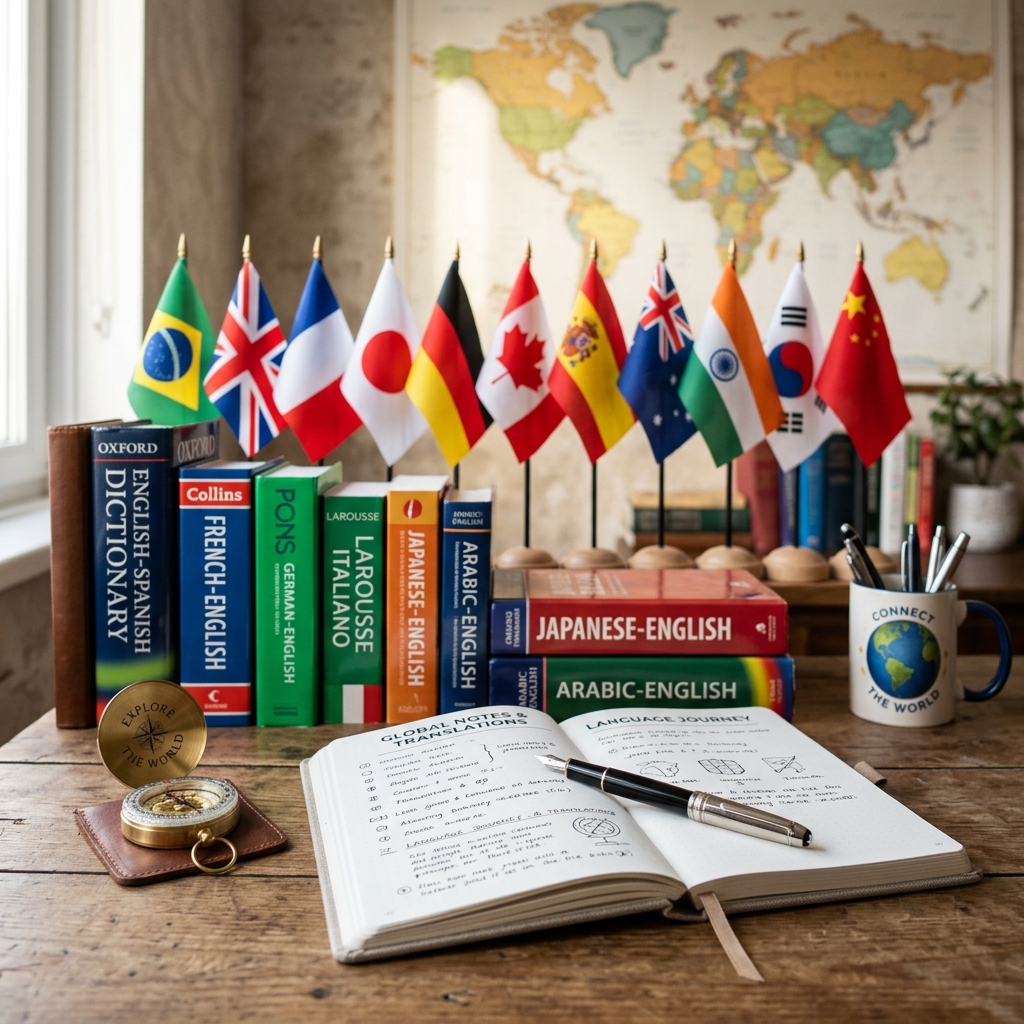
Portuguese is one of the most strategic language choices you can make in 2026. It is the sixth most spoken language in the world with over 250 million native speakers across Brazil, Portugal, Mozambique, Angola, and several other countries. Brazil alone has the world’s ninth-largest economy.
And for English speakers, Portuguese is firmly in the “easy” category. The FSI places it in Category I, the same group as Spanish, French, and Italian. But “easy” comes with asterisks. Portuguese has specific challenges that catch learners off guard, alongside genuine advantages that make progress faster than you might expect.
Portuguese Difficulty at a Glance
| Factor | Difficulty for English Speakers |
|---|---|
| Vocabulary | Easy --- massive Latin cognate overlap |
| Grammar | Moderate --- similar to Spanish with some extra complexity |
| Pronunciation | Moderate to Hard --- nasal vowels and vowel reduction |
| Writing system | Easy --- Latin alphabet with a few accent marks |
| Resources | Good --- growing fast, especially for Brazilian Portuguese |
Compared to other languages on our easiest languages list, Portuguese lands solidly in the top tier for English speakers. It is marginally harder than Spanish but easier than French in terms of pronunciation consistency.
What Makes Portuguese Easy
Vocabulary You Already Know
English and Portuguese share a deep Latin vocabulary pool. Thousands of words are recognizable on sight:
- hospital / hospital
- importante / important
- universidade / university
- diferente / different
- possível / possible
- informação / information
This cognate overlap means you can read a Portuguese newspaper headline and understand the gist within your first weeks of study. Academic and professional vocabulary is especially transparent because both languages borrowed from Latin and Greek.
Grammar Structure Is Familiar
Portuguese follows Subject-Verb-Object word order, just like English. Basic sentences map almost directly:
- English: I speak Portuguese
- Portuguese: Eu falo português
The core grammar concepts --- verb conjugation, gendered nouns, adjective agreement --- are shared across all Romance languages. If you have studied any Spanish, French, or Italian, Portuguese grammar will feel immediately familiar.
Brazilian Media Makes Immersion Accessible
Brazil produces an enormous volume of music, TV shows, films, podcasts, and YouTube content. Brazilian Portuguese media has gone global through Netflix, Spotify, and social media. This gives learners free, endless immersion material at every level.
Popular entry points for learners:
- Music: Bossa nova (João Gilberto, Tom Jobim) for beautiful, clear pronunciation; modern pop for current slang
- Netflix: Brazilian shows like 3%, Sintonia, and Cidade Invisível with Portuguese subtitles
- YouTube: Channels covering every topic imaginable in Brazilian Portuguese
What Makes Portuguese Challenging
Nasal Vowels
Portuguese has nasal vowels that do not exist in English or Spanish. Words like irmã (sister), pão (bread), and não (no) require you to route air through your nose while speaking. The closest English equivalent is the vowel sound in “song” or “sing,” but Portuguese nasalization is more pronounced and more frequent.
Brazilian Portuguese has five nasal vowels: ã, ẽ, ĩ, õ, ũ. They appear constantly in everyday speech. Getting comfortable with nasalization takes dedicated practice, usually 2-4 months of focused effort.
Practical tip: Listen to bossa nova music and mimic the singers. The slow, clear vocal style of bossa nova is excellent for training nasal vowel production.
Vowel Reduction in European Portuguese
If you choose European Portuguese, be prepared for vowel reduction --- unstressed vowels are compressed or dropped entirely, making spoken Portuguese sound very different from written Portuguese. The word presidente, for example, sounds closer to “pruh-zi-DENT” than the fully pronounced version you might expect from reading it.
Brazilian Portuguese retains fuller vowel pronunciation, which is one reason most teachers recommend starting with Brazilian Portuguese. The sounds are clearer and easier for beginners to parse.
Verb Conjugation Depth
Like all Romance languages, Portuguese conjugates verbs by person, number, tense, and mood. Portuguese has one extra feature that even Spanish lacks: the personal infinitive. This is an infinitive form that conjugates by person, and it has no direct equivalent in English:
- para eu falar --- for me to speak
- para eles falarem --- for them to speak
The personal infinitive confuses beginners but eventually becomes intuitive. It actually makes certain complex sentences shorter and clearer than they would be in Spanish or French.
Portuguese also has a future subjunctive tense that Spanish has essentially abandoned. This form is used in “when/if” clauses about future events and appears frequently in everyday speech.
Two Standards, Many Accents
Unlike Spanish (which has regional variation but a widely accepted standard), Portuguese has two distinct written standards (Brazilian and European) and pronunciation varies wildly across regions. A speaker from Lisbon sounds very different from someone from Rio de Janeiro, who sounds different from someone from the Northeast of Brazil.
For learners, the practical advice is simple: pick one variant and stick with it. Brazilian Portuguese has more resources and speakers. European Portuguese is relevant if you plan to live in Portugal or work with Portuguese-speaking African countries (which generally follow European standards).
Portuguese vs. Spanish: The Obvious Comparison
Most English speakers considering Portuguese have already thought about Spanish. Here is how they compare:
| Factor | Spanish | Portuguese |
|---|---|---|
| FSI Hours | 600-750 | 600-750 |
| Pronunciation | 5 vowels, very phonetic | 9-12 vowels, nasal sounds |
| Grammar | Slightly simpler | Slightly more complex (personal infinitive, future subjunctive) |
| Resources | Massive | Large and growing |
| Speakers | 500M+ | 250M+ |
| Media | Huge Netflix/music library | Large Brazilian media ecosystem |
| Job market | Strong across industries | Strong in business, especially Brazil |
If you already speak Spanish, Portuguese is arguably the single easiest language you can learn next. The ladder approach of using Spanish as a bridge to Portuguese is one of the most efficient language transitions possible.
Realistic Learning Timeline
For English Speakers Starting Fresh
| Milestone | Estimated Time (30-60 min/day) |
|---|---|
| Basic survival phrases | 1-2 months |
| Simple conversations (A2) | 4-6 months |
| Comfortable conversation (B1) | 8-12 months |
| Fluent conversation (B2) | 14-20 months |
| Professional proficiency (C1) | 24-36 months |
For Spanish Speakers
| Milestone | Estimated Time (30-60 min/day) |
|---|---|
| Reading comprehension | Immediate (day one) |
| Basic conversation (A2) | 1-2 months |
| Comfortable conversation (B1) | 3-4 months |
| Fluent conversation (B2) | 6-9 months |
Getting Started: Recommended Resources
Apps:
- Duolingo, Babbel, or Pimsleur all offer solid Portuguese courses. Pimsleur is particularly strong for pronunciation training, which matters more for Portuguese than for Spanish.
Textbooks:
- Ponto de Encontro: Portuguese as a World Language --- The standard university textbook covering both Brazilian and European Portuguese
- Practice Makes Perfect: Complete Brazilian Portuguese --- Great for self-study with lots of exercises
Listing check (The Language Research Desk): Confirm Ponto de Encontro is the Portuguese textbook (Brazilian + European coverage) and that Practice Makes Perfect is Complete Brazilian Portuguese, not a Spanish title in the same series. Check edition year and whether audio access is still included.
Media:
- Start with Brazilian music playlists on Spotify for ear training
- Watch Brazilian Netflix shows with Portuguese subtitles
- Follow Brazilian creators on YouTube and Instagram
Conversation practice:
- italki and Preply have large pools of Brazilian Portuguese tutors, often at very affordable rates ($8-15/hour)
- HelloTalk and Tandem for text-based language exchange
Who Should Learn Portuguese?
Portuguese is an especially strong choice if you:
- Already speak Spanish (the fastest meaningful language transition for Spanish speakers)
- Have business interests in Brazil or Portuguese-speaking Africa
- Enjoy Brazilian music and culture
- Want a Category I language that is less crowded than Spanish or French
- Plan to travel in South America (Portuguese opens Brazil, the continent’s largest country)
The Bottom Line
Portuguese is genuinely easy for English speakers, with the caveat that pronunciation requires more practice than Spanish. The nasal vowels and vowel reduction take dedicated work, but the grammar is logical, the vocabulary is familiar, and the immersion resources are abundant. If you are choosing between Romance languages for beginners, Portuguese is a rewarding choice that opens doors most language learners overlook.
Frequently Asked Questions
Is Portuguese easier than Spanish for English speakers? ▼
Portuguese grammar and vocabulary are very similar to Spanish, but Portuguese pronunciation is generally considered harder. Spanish has 5 vowel sounds while Portuguese has 9-12 depending on the dialect, plus nasal vowels. Most English speakers find Spanish slightly easier overall, though both are FSI Category I languages with similar study timelines.
Should I learn Brazilian or European Portuguese? ▼
Brazilian Portuguese has more learning resources, clearer pronunciation for beginners, and more speakers (215 million vs 10 million). European Portuguese sounds more compressed and faster, which makes it harder for beginners to parse. Unless you have specific ties to Portugal, most learners start with Brazilian Portuguese.
How long does it take to learn Portuguese? ▼
The FSI estimates 600-750 hours of intensive study for professional proficiency. Self-learners can reach basic conversational ability in 6-9 months with consistent daily study. If you already speak Spanish, the timeline shortens dramatically --- many Spanish speakers reach conversational Portuguese in 3-4 months.
Is Portuguese harder than French? ▼
They are roughly equal in overall difficulty for English speakers (both FSI Category I). Portuguese pronunciation with its nasal vowels is challenging, but its spelling is more phonetic than French. French has more silent letters and irregular pronunciation rules. Grammar complexity is comparable.
Does knowing Spanish help with learning Portuguese? ▼
Enormously. Spanish and Portuguese share approximately 89% lexical similarity. A Spanish speaker can often read Portuguese text and understand 70-80% without any study. Speaking and listening require more work due to pronunciation differences, but the grammar transfer is nearly seamless.
We research and compile information about language learning from linguistic studies, FSI data, and language learning communities.
Related reading
 Language Rankings
Easiest Asian Languages for English Speakers: Ranked by Difficulty
Which Asian languages are easiest for English speakers? We rank them using FSI data, grammar complexity, and writing systems.
 Language Rankings
Easiest European Languages to Learn: Complete Ranking for English Speakers
All major European languages ranked by difficulty for English speakers using FSI data, grammar complexity, and resources.
Language RankingsFSI Language Difficulty Rankings Explained: How Long Does Each Language Take?
The Foreign Service Institute ranks 70+ languages by difficulty. Learn how FSI categories work and what the hour estimates really mean.