Language Immersion at Home: How to Surround Yourself Without Traveling
Editorial Team
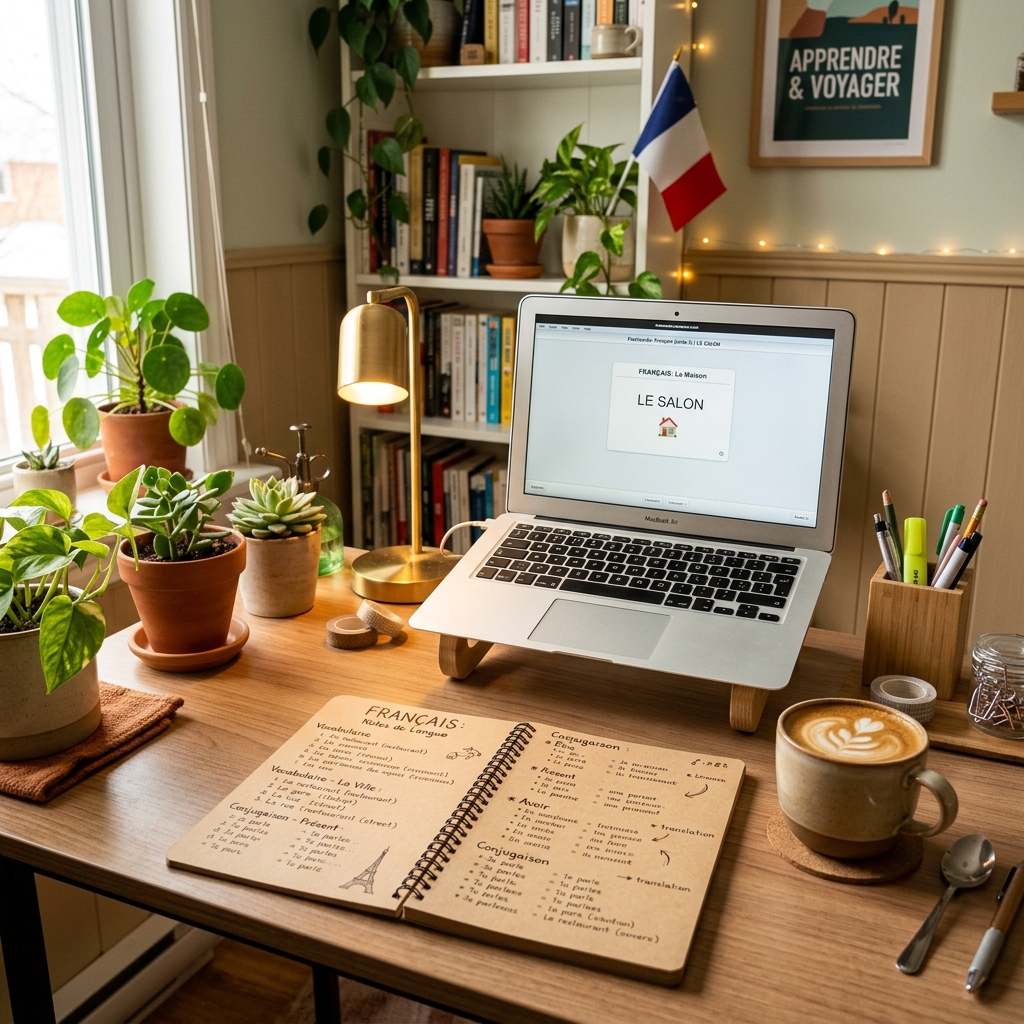
What Immersion Actually Does
Immersion works because it forces your brain to process the target language constantly. There is no English escape hatch. Your brain adapts by building faster neural pathways for the new language.
The good news: you can simulate 60-80% of this effect at home.
The Home Immersion Toolkit
1. Change Your Phone Language
This is the simplest and most impactful change. You use your phone 100+ times per day. Every interaction becomes a micro-lesson in the target language. You already know what the buttons do, so context helps you learn the new labels.
For more on this topic, see our guide on How to Start Thinking in a Foreign Language (And Why It Matters).
2. Watch TV in Your Target Language
Start with shows you have already seen in English, dubbed into your target language, with subtitles in the target language. You already know the plot, so you can focus on the language.
For more on this topic, see our guide on How Long Does It Really Take to Learn a Language? FSI Data Explained.
Progression:
- Phase 1: English audio, target language subtitles
- Phase 2: Target language audio, target language subtitles
- Phase 3: Target language audio, no subtitles
3. Listen to Podcasts and Music
Replace your English podcast rotation with target language content. Start with podcasts designed for learners (they speak slowly and use simple vocabulary), then graduate to native content.
4. Label Your House
Write the target language word on sticky notes and attach them to objects: refrigerator, door, window, mirror, lamp. Every time you see or interact with the object, you reinforce the vocabulary.
5. Think in the Language
Narrate your daily activities in the target language in your head. Making coffee? Think through the process in the target language. This builds the mental habit of formulating thoughts without translating from English.
6. Journal in the Target Language
Write 3-5 sentences about your day in the target language every evening. This forces you to actively produce language (not just passively consume it) and reveals gaps in your vocabulary and grammar.
The 80/20 Rule
You do not need to go 100% immersion immediately. Start by replacing 20% of your daily media consumption with target language content. Increase gradually as your comprehension improves.
We research and compile information about language learning from linguistic studies, FSI data, and language learning communities.
Related Articles
 App Reviews
The 7 Best Language Exchange Apps for Real Conversation Practice in 2026
A research-based comparison of the best language exchange apps for 2026 — italki, Tandem, HelloTalk and more — by features, pricing, and community.
Learning TipsStuck at Intermediate? How to Break Through the Language Learning Plateau
The intermediate plateau is where most learners stall. Progress feels invisible and motivation drops. Here is the escape plan.
 Language Rankings
10 Easiest Languages to Learn for Absolute Beginners
Never learned a language before? These 10 languages are the most beginner-friendly for English speakers, with the best resources available.